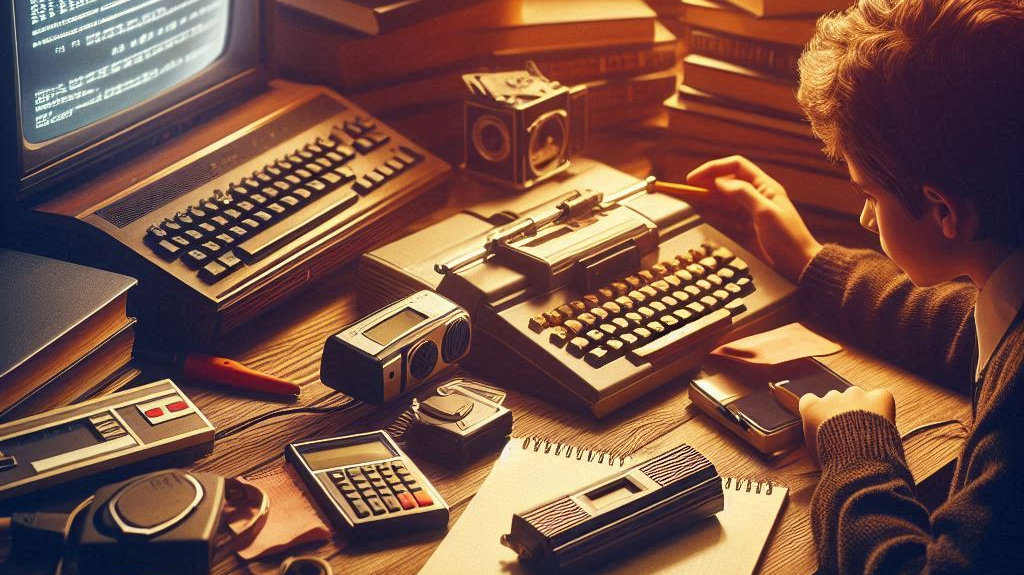
My first earnings from tutoring funded my gadgets — Walkman, Atari, and eventually an IBM 386. By 14, I was coding and building retail checkout systems for local shops. This also raised some good pocket money for a while.
It started when I noticed the owner of a corner shop near my house struggling with his checkout system when processing customer orders.
Joe was an elderly Irish gentleman — a traditional gentleman. Always in a three-piece suit, running his corner shop. He must've been in his eighties and had an air of elegance in the way he carried and conducted himself. He was obviously well-respected and well-liked by all. Even the naughty kids behaved well in his shop or they faced getting barred for less-than-acceptable behaviour.
This was in the mid-eighties, long before modern day software came about. I'm talking days of COBOL, Lotus and the like. Barcode scanning in retail systems didn't become the norm across Ireland until over a decade later. Small shopkeepers had to place pricing labels on goods and manually enter prices into the till at checkout. The till recorded all entries and kind of helped in inventory management and accounting through report printouts — it was all manual work!
So on this afternoon, on way home from school, I popped-into Joe's corner shop and noticed that instead of entering prices into his checkout teller machine, he was entering those into a calculator and writing down item names, quantities and amounts into a ledger with a pen.
On asking, he mentioned the problem with the machine, and that someone from the manufacturer would visit him to fix it in a couple of weeks. He also indicated that this visit had been postponed a few times and he had been without a working teller machine for over a month at that point.
Honestly speaking, I didn't know much about such checkout teller machines at the time, or the software they used, or even what their various parts were called. But it stayed on my mind and a couple of days later, I bumped into a neighbour in the street. He worked for a pharmaceutical company as an engineer. On asking, he said he wasn't sure but had a feeling that these machines used a software called COBOL-74.
With a couple of books from the library, some help from the tech lab technician at school, and some borrowed tools, I managed to fix Joe's retail teller. It did take about a week of hard graft, but thanks to the summer holidays, I had the time needed.
The word got around, and I started getting jobs from people regarding their tech, or what passed for tech in those days. Over the course of a few months, I fixed some Walkman devices, a few radios, and replaced faulty speakers in a few audio cassette players.
Technology wasn’t just a hobby — it was my curiosity, my desire to learn and know more. It eventually became my career and passion. It taught me problem-solving, creativity, and the power of innovation through structured thinking approach, perseverance, and desire to learn.
Looking back now, I shudder with the thought about the risk I unknowingly took with Joe's retail teller. It could have resulted in loss of his sales history data! Though it didn't happen, but could well have!
In this blog, I’ll share how tech shaped my worldview and continues to influence my approach to business and strategy.
Stay tuned for my future blog posts.